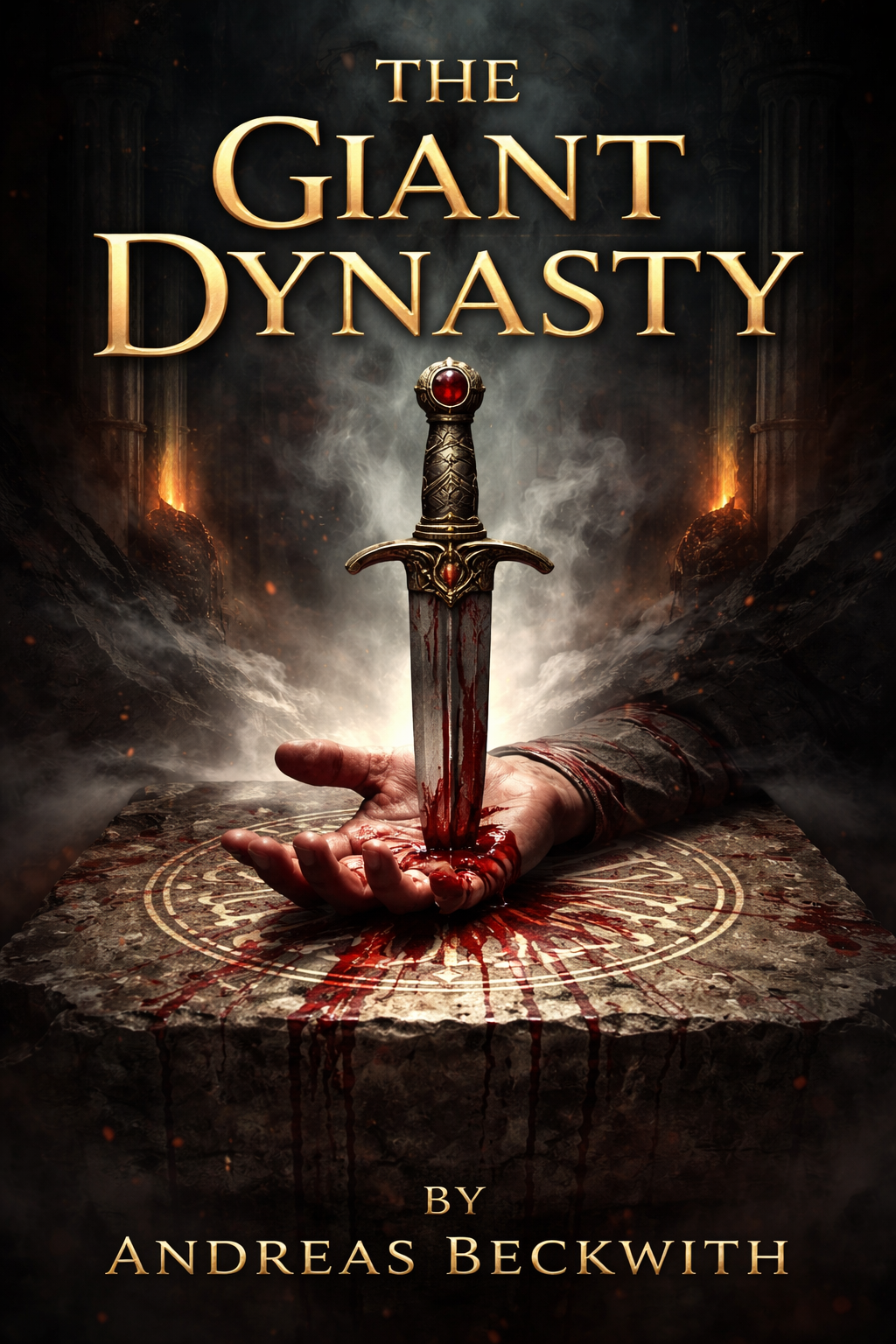
World-building is a massive part of fantasy fiction and of sci-fi, especially if your novel takes place in a totally made-up world, as mine does. There’s no one way to plot this, no specific blueprint to follow, and though I’m sure there are books and articles. I want to lay out how I built Rumithia, the process, the results and why doing that can actually have an impact on your writing going forward.
I tried to caveat this already in the above paragraph, there is no specific method on this, I’m not claiming to provide any magic code on how to do this – merely to provide my own way of how I world-built.
Make it up as you go along
While it might sound cliché to say, writing makes me a better writer, and the process of writing fiction is actually part of how I world-build
This was the way I went about it – literally! I never sat down before writing my first book to think about the world I wanted to build, its regions, the different races, its inhabitants, the languages spoken, the history – it all came about spontaneously. In fact, when I first started writing my first book on Rumithia, it was a story with very little detail. Several creatures didn’t exist, rooklins were added well after my very first draft, as were giants, there were only a few key locations that I had conceived of. There was backstory, brought to the front of the story in a big info-dump (more on that at a later time, maybe) so there was an element of history, but it was still in a quite basic form.
What I didn’t do was sit down and map out all the details of the world before writing my book, the opposite is true. There may be authors out there who can only conceive of all the details in a world first before they start writing – I’m definitely not one of them. That’s why I’m keen to emphasize how there is no one formula that works, it’s each to their own strategy.
My process was to write my book, and as I went along I would question myself, why did this happen? What backstory was there to this big event? As I wrote out my characters, I plotted how they would behave and later thought of building their personalities around what I had already written. A kind of shoot first, ask questions second approach!
I’ve heard on some podcasts that some authors would interview their characters first of all, to get an idea of their characters, and how they would behave in certain situations. That’s not the way I do things, I create the action, the characters fit it into that, and later I start deepening their characteristics and looking into why they react the way they do on the page, but for me, it’s always an afterthought. This is just what has worked for me, and I’ve shaped my characters.
Retroactive Alimentation
I go into this in detail on my video here, as well as other details, but as a result of my approach, I find myself often going back to what I have written, having fleshed out characters or plot details further, and this enriches my writing. For example, one of the clearest examples I have is with the Traitor’s Eye and with Kelorne’s journey north to Vengore.
In my original draft of Traitor’s Eye, and for a few drafts afterwards, I had Kelorne’s motivation as being very spontaneous. In these drafts, he knew about Vengore, it had been on his mind for a while, and after an inciting incident involving Yonmere, he suddenly decides to travel to Vengore to discover what mysteries the land holds, and whether it can change his destiny. I’d always justified it as a means to an end – I had to get Kelorne north to unravel the story’s plot. It was only after thinking things through, and building my timeline with the Chronicles of Rumithia, which literally started out as a chronological history of Rumithia did I write out the plot for the The Giant Dynasty and then that was my eureka moment. That was the plot, the key reason for Kelorne going north. This world building – as in the history of the world rather than regions or tribes – is something I think I do best retroactively.

I re-wrote the beginning of Traitor’s Eye to include this detail, and suddenly I felt content as an author that the reasoning, the character motivation was legitimate. For so long, I could rely on this inciting moment for Kelorne to fall back on something he’d been stewing over a while to suddenly trigger him, but in reality – I couldn’t. It was too weak. I needed something else to motivate him, and I’m glad I found it.
I’ve also done this with other elements of world building. For example the giants, in my first writing of them, they were just one-dimensional characters. Then I started asking questions about them, changing their characteristics, adding backstory to them. I actually later then go and weave some of that in, even if its not relevant. For example, I have added in mentions of the Redbeards and Blackbeards rivalry throughout my other books, even when it’s not necessary for the plot – it just adds an extra layer of richness to the world. If you are writing series, it helps to carry over these ideas.
This way of writing may make that inevitable, regular revisions as I add more detail later on, but that’s how I work. It’s not for everyone, but for me – it works.
Worldbuilding as you write
Another thing or tool I use to world-build is actually just to write. While some of my construction comes a long time after I write the first draft, a lot can also come whilst writing. When I have a story in my head, I plot out how things go, the key actions I want to happen etc. However, writing can be such a magical process, and when you write, new ideas come about simply through the process of writing. Maybe I just speak for myself, but there have been so many times I’ve sat down to write something with a pre-conceived idea, and then as I’m writing, I’m suddenly motivated to make a change – and it makes more sense.
While it might sound cliché to say, writing makes me a better writer, and the process of writing fiction is actually part of how I world-build. Things come out when I write, and I question, well how did this get here, why is this character here now saying this, or what has happened to get this character here and how this way etc. This is relevant to places, races regions etc, what significance does this place/race/reason have, what has influenced them up to now?
Putting into practice with The Giant Dynasty

As I mentioned on one of my previous blogs, I wrote The Giant Dynasty from notes on a timeline into a story because I thought that it made sense, it was a story waiting to be told. It’s also a story written where I had fleshed out quite a bit of the backstory, and I knew where things were going, as I’d written the sequel already. Yet still, there were so many parts that I came up with as I wrote.
I had Alitek and his brothers on my chronology, as well as Theokin, but there were several characters that I hadn’t conceived of. Igor, Alitek’s son wasn’t on the chronology, he was created as I wrote, as was Schaetzen. Alitek’s wife Finola existed before I wrote The Giant Dynasty, but she only appeared in my chronology after the event of The Giant Dynasty, she came to life as I wrote, as I found a role for her in the book.
The Giant Dynasty was really me putting these two elements together, the world-building I had done after writing Traitor’s Eye coming to life as a story of its own, building on notes, but also creating as I went along, in the process of writing itself.